
A resource to engage colleagues in how to better support UC reentry students.
About: This resource includes various materials and resources captured at the 2023 Symposium on UC Reengagement hosted at UC Merced in June 2023. As a part of efforts to better support reentry students more broadly through a centralized approach, this toolkit was designed to continue the dialogue from the Symposium, including the introduction of the initial discussion with colleagues within the UC system who could not attend. The information captured will consist of broad, general remarks or notes collected throughout the symposium.
Using the Toolkit: This resource should not be used for marketing, publicity, or any purposes outside of internal University of California discussions. This resource page is not a part of a public website and only individuals with the URL may access. This resource page is not guaranteed to be regularly moderated or updated.
Toolkit Content: This resource includes the following:
- Symposium Agenda
- What's Next?
- Presentation Slides & Recordings
- Roundtable Discussion Summaries
- About the UCRC
- Regents Meeting & In-the-Press
Symposium Agenda
Download the full program agenda:
symposiumagenda.pdf
What's Next?
Attendees are currently completing a experience feedback form, in which will be used as a part of determing the next steps. Whether or not you attended, the Consortium will serve as the host for continued conversations with you. It is the intent to facilitate ongoing conversations with various stakeholders internal and external to the University of California on how to advance our commitment to equity and access in serving support reentry students.
Possible Next Steps
Campus-specific dialogue: each campus may consider facilitating a conversation specific to their campus's efforts. Memeber(s) of the consortium may support these conversations to share feedback, data, or student testimonials, collect progress, and identify opportunities for collaboratoin through a centralized approach.
Systemwide discussions (reoccurring): the consortium may serve as a lead of convening like minded stakeholders across the UC system, including faculty, staff, leadership, and governance structures around possible discussions on financial aid and resources, reentry policies, graduation and retention efforts, curricular programming, and more. Each discussion may include opportunity to hear from an industry expert on related research, models, or strategies, in addition to facilitaing open dialogue amongst our peers.
Presentations
Empowering Resilience: Championing Returning Adult Students on Their Educational Journey
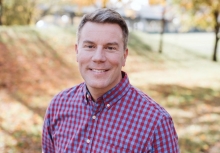
Keynote Speaker: Matthew Bergman, Ph.D. - Associate Professor, University of Louisville
About the Presenter: an Associate Professor at the University of Louisville and author of "Unfinished Business: Compelling Stories of Adult Student Persistence." Dr. Bergman’s research is focused on student persistence, prior learning assessment, leadership, and degree completion programs. His work has been highlighted in international media outlets including The Wall Street Journal, The Washington Post, The Chronicle of Higher Education, NPR, and TIME Magazine. His program was the recipient of the ACHE Distinguished Program Award, AAACE Curriculum Innovation Award, and the AAACE Malcolm Knowles Award for Adult Education Program of the Year. Dr. Bergman was awarded the ACHE South Outstanding Faculty Award, the Metroversity Outstanding Faculty for Adult Learners, and was a Top 4 Faculty Favorite at UofL. He is a Fellow for Complete College America and Ambassador for the Council on Adult and Experiential Learning (CAEL) that serves as a teacher, administrator, and ambassador of degree attainment both locally and nationally.
Download Presentation Slides:
keynote-empowering_resilience_championing_returning_adult_students_on_their_educational_journey.pdf
University of California Reengagement Consortium (UCRC)
Presenters:
Michael Pierick, UC Merced Professional and Continuing Education
Marie Martin, UC Riverside Extension
Jennifer Schwedler, UC Davis Continuing & Professional Education
Watch the Presentation:
Download Presentation Slides:
university_of_california_reengagement_consortium_ucrc_presentation_day_1_120_pm.pdf
UC Merced Reentry Student Panel
Student Panelists:
Lilliana Baaron, Public Health/Psychology minor, expected graduation Fall 2024
Luis Zaragoza, Computer Science & Engineering, expected graduation Spring 2025
Listen to the Panel Discussion:
Want to hear from more UC stop-outs? Listen to these additional testimonials below.
Reengaging UC Stop-Outs: Who are they? What do they need? How do we support?
Presenters:
Michael Pierick, UC Merced Professional and Continuing Education
Marie Martin, UC Riverside Extension
Jennifer Schwedler, UC Davis Continuing & Professional Education
Watch the Presentation:
Download Presentation Slides:
reengaging_uc_stop-outs_who_are_they_what_do_the_need_how_do_we_support_day_2_945_am.pdf
UC 2030 Capacity Plan: Non-Traditional Enrollment Strategies
Presenters:
Carmen Corona, MPA, Director, Academic Planning & Policy
Ethan Savage, Academic Planning & Policy Analyst
Institutional Research & Academic Planning (IRAP)
University of California Office of the President (UCOP)
Watch the Presentation:
Download the PowerPoint Slides:
ucop_uc_2030_capacity_plan_presentation_day_2_-_12_pm.pdf
Roundtable Discussions
Policies & Barriers to Student Reentry
Thus far, each of UCRC campuses has been able to address low hanging barriers, such as graduation residency, number of petitions submitted, types of petitions, part-time status, etc. But many barriers and challenges related to policies continue to be unknown or arise in our daily discussions with stop-out students.
Summary Points:
- There is a need for topdown advocacy to help reform policy to best fit student needs.
- We need to demonstrate data on how these policies currently affect our students.
- We should look at the language our campuses are using and see how this language can discourage or encourage a student to return. Create student-centered or asset-based language models.
Download the full summary:
policies_barriers_to_student_reentry.pdf
The Known & Unknown: A Deeper Dive into the Data on UC Stop-Outs
At each of our campuses, we make data-driven decisions on recruitment and retention that may include academic preparedness, quality of previous educational experience, frequent touchpoints and drop-offs, among so many others. When we consider stop-out or reentry students, there are unique student journeys that present challenges to reentry, such as academic standing upon leaving, institutional debt, number of units earned, financial aid eligibility, among many others.
Summary Points:
- A significant amount of data is currently accessible, however, there is a lack of understanding of who knows about the data, where the data goes, and how data is shared across a single campus or entire UC system.
- The data that appears to be collected and analyzed can be merged (e.g., Advising data plus Degree Completion data) to support the advocacy for increased capacities within crossdepartment and -campus partnerships.
- Degree audit data in real time creates opportunities to address foreseeable barriers on the spot. Degree audit data is heavily manual and individual review process. The need for an automated, real time data tool to assess audits effectively.
Download the full summary:
the_known_unknown_a_deeper_dive_into_the_data_on_uc_stop-outs.pdf
Flexibility is Key: Credit for Prior Learning, Certificates, & Professional Learning
In Merced’s outreach alone to over 5,200 students, we have reengaged a total of 318 students with the traditional programming and offerings. However, of those reengaged but not interested or needing other solutions, 96% of over 200-250 students have requested online options. Students need more consideration than just the online option. In our summer completion campaign where summer online courses were available, of the 139 students identified who could finish entirely online this summer, only 26 participated. They need also options for credit for prior learning, professional learning opportunities tied to their careers, and options for asynchronous, low residency, evening, or weekend courses.
Summary Points:
- Looking at salesforce to engage students and capture them and their stories to share within the system.
- Faculty engagement and buy-in campuses that have already developed some of these relationships create documentation to share, one pager, to help the other campuses to have a process and starting point on their own campuses.
- Across campuses have better data from leaving UC and a reengagement plan clearly set for students when they are thinking of leaving or withdrawing.
- CLEP being put forth for consideration.
Download the full summary:
flexibility_is_key_credit_for_prior_learning_certificates_professional_learning.pdf
Expanded Support Models for Reentry in the Future: From Advising to Outreach
As outlined in the UC 2030 Capacity Plan, more specifically the Non-Traditional Enrollment Strategies, there are many efforts across the UC system focused on supporting student reentry in various formats. The University of California Reengagement Consortium or UCRC is arguably the first centralized approach to support all reentry students across each of the nine undergraduate campuses. So far, it conceptually originated at Merced and formally established at Davis and Riverside increasing the overall capacity, with the addition of Santa Barbara.
Summary Points:
- In so many identified capacities, leveraging a centralized approach will allow for greater transformational support for student success (e.g., Salesforce).
- Understanding the existing pilot model is supporting inactive (“stopout”) students with several years of separation, how does the pilot inform opportunities to move this support earlier up as students are leaving actively or upon indication of high-risk indicators of leaving. This also aligns ensuring we are supporting the 4-year and 6-year graduation targets campuses are assessed on.
- Centralized advising model allows for increased capacity of highquality services that have traditionally fallen on that of the academic advisors who have caseloads nearly double or triple the recommended amount of 1:250.
Download the full summary:
expanded_support_models_for_reentry_in_the_future_from_advising_to_outreach.pdf
Student Reentry as a New Enrollment Priority
Considering the number of UC stop-outs that leave a UC campus each year without a bachelor’s degree, focusing the priority of strategic outreach to these students may serve as an opportunity for each of the various campuses to meet enrollment targets and continue the UC’s commitment to equity and access. When we think of the creative solutions through UCRC and other reentry efforts, how can we as a system commit to reentry students through a centralized approach that will increase our capacity to serve more CA residents and other student populations?
Summary Points:
- Faculty are a critical part of these conversations. The necessary transformations are already critiqued for concern to change curriculums to devalue UC education. Identify faculty champions to support this work and progress towards equitable and accessible options to finish degrees for adult learners.
- Broader access potentially dilutes the value of the UC degree. Faculty focuses on preparing students to become future graduates and faculty. For those without that goal, how do we adjust for the student populations? Degree and salary bump as goal versus continuing to graduate education. Find faculty advocates to align.
- Any enrollment growth strategies must consider physical space capacities and the challenges to ensure that each student invited to campus is well supported. Potential area for expansion online or flexible options that do not create physical space constraints.
- Necessary to increase crosscampus articulation, where current articulation is a scarce staffing resource (hard to articulate courses with community colleges for faculty). Consider opportunities for the articulation team to be pulled out of admissions and work directly with faculty to prioritize articulation. The first-term barrier that half the articulation isn’t there yet.
Download the full summary:
student_reentry_as_a_new_enrollment_priority.pdf
Preventing Stop-Outs: What needs to stay? What needs to change?
We continue to learn from the experiences captured from each of our reengaged students and the continuing qualitative and quantitative data we collect. From these stories, we can shape and influence the inconsistencies of our policies and processes that are contributing to the barriers and obstacles of reentry students prior to their departure. We commonly understand there is a policy, then the process, and ultimately timing. Usually, the policy and process are designed with the best intention of the student, but the timing of how that process aligns with other policies and processes is unintentionally a hinderance to the continuing enrollment of students.
Summary Points:
- The importance of an integrated early alerttype system that allows various stakeholders, including faculty, advisors, support personnel, or student employment supervisors to flag student behaviors that are proven to increase likelihood of stopping out.
- There are a lot of efforts and initiatives of retention strategies that appear to be useful, however they are under resourced and unlikely to receive continued funding. These efforts need to be better resourced and build capacity through crossdepartment/-campus collaboration.
- How can a high touch, individualized advising model to be scaled to all students or beyond just athletes before they are stopouts and received this from degree completion programs?
- Identifying methodologies to provide consistent communication to students flagged for high risk of stopping out. Currently, it appears to be on the academic advisor and their caseloads.
- Collaboration across single campuses and multiple campuses as a willingness to support a struggling student to receive the bestfit resources as a retention strategy.
Download the full summary:
preventing_stop-outs_what_needs_to_stay_what_needs_to_change.pdf
About the University of California Reengagement Consortium
In 2019, legislation approved one-time $15m to UC Extensions for a new, non-traditional enrollment innovation of supporting UC reentry students. UC Merced and UC Santa Barbara were a part of the initial funding allocation with pilot degree completion efforts for UC stop-outs. In 2022, UC Riverside and UC Davis followed in establishing the University of California Reengagement Consortium (UCRC). UCRC leverages a shared operational model that includes a community of practice (advising, leadership, policy advocacy), data sharing and reporting, shared operations (technology, staff, marketing), and strategic solutions focused on high touch, individualized degree completion planning.
Collectively, as of June 2023, the Consortium has reengaged a total of 937 UC stop-outs, of which 64 have already received their degrees, 46 have filed or refiled for graduation, 100 have readmitted or applied for readmission, and 540 are actively participating with in-progress advising. Additionally, the total reengaged includes 187 students who left in poor standing.
Need to Refer a UC Stop-Out Student for Support?
Find out what’s possible by getting in touch with a UC reentry specialist at any UCRC campus.
UC Davis | ucdcp.ucdavis.edu
degreecompletion@ucdavis.edu
Click here to book an appointment with an advisor
UC Merced | degreecompletion.ucmerced.edu
degreecompletion@ucmerced.edu
Click here to book an appointment with an advisor
UC Riverside | extension.ucr.edu/degreecompletion/getstarted
completion@ucx.ucr.edu
Click here to book an appointment with an advisor
UC Santa Barbara | professional.ucsb.edu/degree-completion-program
completion@professional.ucsb.edu
Regents Meeting & In the Press
May 17, 2023 (UCLA) - Academic and Student Affairs Committee (ASAC)
A4: Where and How UC Happens: Current State and Expansion
Watch the presentation by Kevin Vaugh, Dean of UC Riverside Extension:
July 19, 2023 (UCSF) - Academic and Student Affairs Committee (ASAC)
A4: Reimagining How and Where UC Happens: UC Reengagement Consortium
Watch the presentation by Michael Pierick, Director of UC Merced Extension & Degree Completion, and UC Merced Degree Completion Student, Lilliana Barron:


